
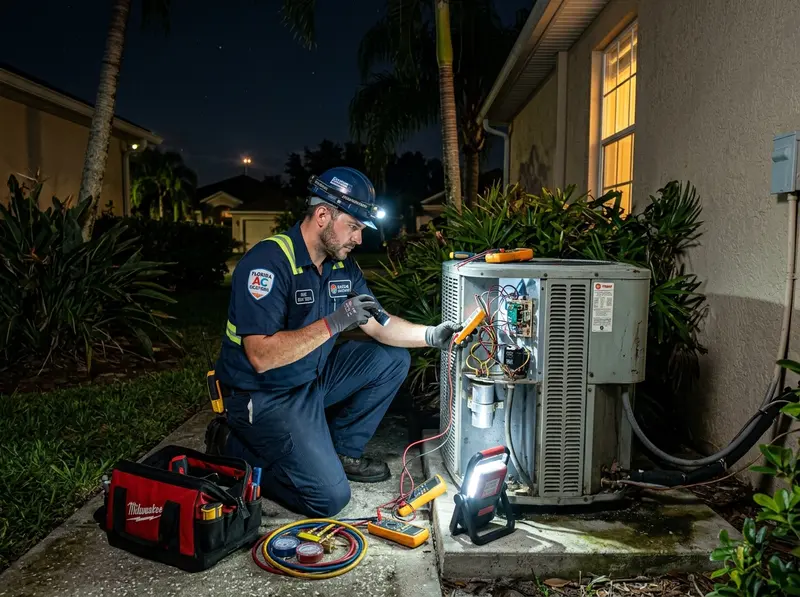
When the outdoor temperature is 95°F and the humidity is thick, a sudden air conditioner breakdown is a genuine emergency. Indoor temperatures in Florida can climb into the 80s and 90s within a few hours, creating unsafe conditions for children, elderly family members, and pets.
If your AC has stopped working completely, follow this immediate action checklist to stay safe and resolve the issue quickly.
1. Perform Basic Electrical Checks
Before calling for emergency service, verify if the system has simply lost power.
- Check the Thermostat Screen: If the screen is blank, your thermostat may have dead batteries, or the low-voltage transformer fuse has blown due to a system short. Replace batteries if applicable.
- Inspect the Main Electrical Panel: Locate the circuit breaker labeled "AC" or "HVAC". If it is tripped (in the middle position), switch it completely "OFF" and then back "ON". If it trips again immediately, do not attempt to reset it. You have an electrical short or a locked compressor.
- Check the Condensate Safety Switch: Look at the PVC drain pipes next to your indoor air handler. If you see a small device wired to the pipe with water backed up inside, your drain is clogged. The safety switch has cut power to the system to prevent flooding.
2. Turn Off the System (If Frozen)
If your air handler is blowing warm air but running, check the copper lines entering the unit. If you see ice or frost, turn the thermostat to "OFF" and set the fan to "ON".
- Why this is critical: Melting a frozen coil can take 2 to 6 hours. A technician cannot perform diagnostic tests on a system blocked with ice. Turning it off immediately starts the thawing process, so the system is ready for testing when the technician arrives.
3. Keep Your Home Cool While Waiting
While you are waiting for dispatch:
- Close Blinds and Curtains: Block direct sunlight from entering your windows, especially on south- and west-facing walls.
- Keep Doors Closed: Avoid going in and out of the house to preserve the remaining cool air.
- Use Ceiling Fans: Fans circulate air, creating a wind-chill effect that makes you feel cooler, though they do not lower the actual room temperature.
- Stay Hydrated: Drink plenty of water and wear light, loose clothing.
4. Know When to Leave
If you have vulnerable family members, or if indoor temperatures exceed 85°F and you cannot secure a technician immediately, plan to stay with a neighbor, family member, or at a public air-conditioned location (like a library or mall) until repairs are completed.
Contact Emergency Dispatch
If your system is unresponsive or blowing warm air, do not try to disassemble components yourself. High-voltage connections and pressurized refrigerants are highly dangerous.
Contact our dispatch hotline to coordinate emergency diagnostics. Review our AC repair page for service details or find your Florida service city for prompt assistance.