Operating an air conditioner in Florida is vastly different from running one in any other region of the country. The sub-tropical climate, high moisture levels, and proximity to salt water subject cooling systems to extreme operational stress.
As a result, Florida units wear out faster and require more frequent diagnostic attention. Here are the three most common AC problems experienced by homeowners in the Sunshine State.
1. Corrosive Salt-Air Damage
If you live within ten miles of the Atlantic Ocean or the Gulf Coast, your outdoor unit is constantly exposed to salt-laden moisture.
- The Problem: Salt air accelerates galvanic corrosion. When moisture settles on the outdoor unit, it reacts with the copper tubes and aluminum cooling fins, causing the metal to pit and crumble. This eventually results in refrigerant leaks and reduces the unit's ability to release heat.
- The Solution: While all coastal units experience corrosion, you can slow it down by gently rinsing your outdoor unit with fresh water from a garden hose once a month. When replacing components, technicians recommend utilizing coated coils that resist salt corrosion.
2. Clogged Condensate Drain Lines
Florida's high relative humidity means your indoor evaporator coil is constantly pulling gallons of water out of your home's air.
- The Problem: As moisture drains into the condensate pan and flows through the PVC drain lines, it creates a dark, damp breeding ground for algae and mold. Over time, a thick layer of biological sludge blocks the pipe. If the drain line clogs, the condensate pan will overflow, potentially causing ceiling damage, or it will trip a safety float switch and shut down the system.
- The Solution: Regularly flush your drain line with white vinegar. If your unit has completely shut down and you notice water pooling around the indoor air handler, you will need a technician to flush the line under pressure.
3. Electrical Surges and Weak Capacitors
Florida is widely known as the lightning capital of the United States. Afternoon summer storms regularly cause grid voltage fluctuations, dips, and surges.
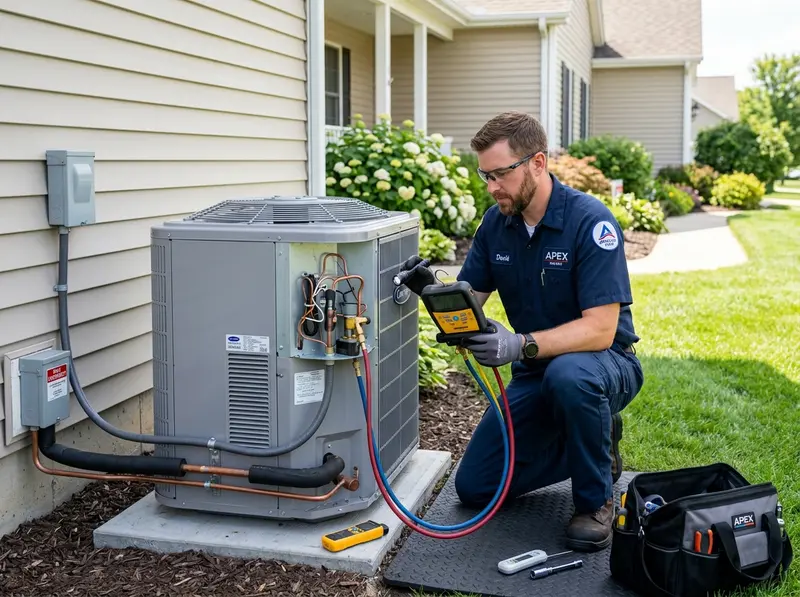
- The Problem: These electrical fluctuations put severe stress on your AC's starting components. The run capacitor—a small cylindrical part that stores energy to help turn on the compressor—is highly sensitive to voltage spikes and high ambient temperatures. When a capacitor weakens or blows, the outdoor fan or compressor cannot start, causing the system to blow warm air or hum loudly.
- The Solution: Installing a dedicated HVAC surge protector on your outdoor disconnect box can save you from costly control board and compressor failures. If your system is humming but not starting, contact a local technician to test and replace the starting capacitor.
Stay Ahead of the Heat
Understanding these local challenges is the key to preventing complete system failure. If your system is struggling with airflow or short-cycling, check our service page to review diagnostic solutions or find a technician in your local Florida community.